Basic Information
| Field | Detail |
|---|---|
| Full name | Darrell Kenyatta Evers |
| Born | June 30, 1953 |
| Died | February 18, 2001 |
| Age at death | 47 |
| Place of birth | Mound Bayou, Mississippi |
| Parents | Medgar Wiley Evers (father), Myrlie Evers-Williams (mother) |
| Siblings | Reena Denise Evers, James Van Dyke Evers |
| Reported spouse / partner | Lauren McIntyre (listed in some biographical summaries) |
| Identified roles | Artist — described as an avant-garde painter; private entrepreneur |
| Grandparents (as provided) | Jesse Evers; James Van Dyke Beasley |
I write this as someone who leans into small, human details—the ones that make history feel like a living room conversation. Darrell Kenyatta Evers is not a headline the way his father, Medgar Wiley Evers, was. But when you trace the arc of a life threaded through one of America’s most consequential families, the smaller shapes matter: names, birthdays, the turns of geography, the quiet choices someone makes when the expectation is loud.
A childhood cut by history (1953–1963)
Darrell was born on June 30, 1953, in Mound Bayou, Mississippi—one of three children in a household that already carried a public mission. By 1963, at the age of nine, his childhood was forever altered: his father was assassinated. That year is a hard number in the family chronology; it reshaped the next generation’s private and public lives. I imagine, as anyone might, a young boy carrying his middle name—Kenyatta—like a small, luminous object someone had placed in his palm, a name with resonance and a demand.
Adulthood: art, independence, and a different kind of public life
As an adult, Darrell is described in family and memorial pages as an avant-garde painter and entrepreneur—someone who chose a path less about the podium and more about studio light and private projects. He lived in California for part of his adult life and deliberately did not follow an overt political path like his parents. Numbers here are sparse—this was a life kept more private than historical—but the dates we do have—1953–2001—frame a life that moved from the Deep South into broader American cultural space during decades of seismic change.
The family table — everyone introduced
Families are ecosystems—densely connected, sometimes noisy, sometimes quiet. Below I list the family members most commonly mentioned alongside Darrell, and the small introductions that help you picture who they were.
| Name | Relation | Snapshot introduction |
|---|---|---|
| Medgar Wiley Evers | Father | Civil-rights organizer, NAACP field secretary, assassinated 1963—an icon of the movement that set the family’s public role. |
| Myrlie Evers-Williams | Mother | Activist and organizer in her own right—carried the family forward and became a public face of resilience. |
| Reena Denise Evers (Reena Evers-Everette) | Sister | A sibling active in maintaining the family legacy; present in family-oriented public work. |
| James Van Dyke Evers | Brother | The younger brother, identified in public materials as one of the three children, with a creative bent (commercial photography noted in some biographical snippets). |
| Lauren McIntyre | Reported spouse/partner | Appears on some biographical listings as a partner; adult life details are otherwise private. |
| Jesse Evers | Grandparent (as provided) | Included per family information provided earlier. |
| James Van Dyke Beasley | Grandparent (as provided) | Included per family information provided earlier. |
Dates and the small arithmetic of memory
Dates are anchors: Darrell’s birth in 1953, his father’s death in 1963, his own passing in 2001. That’s a span of 47 years—47 summers, winters, canvases, business ventures, and private conversations that rarely made the front page. When I think about those numbers, I imagine a film reel: ten frames of family portraits, a handful of gallery shows, a few obituaries, and the long remainder where daily life happens away from cameras.
Net worth and the economy of privacy
There’s no clean dollar figure that accompanies Darrell in public accounts. Instead of a financial ledger, what exists is an artistic ledger—works, exhibitions (some small, some private), entrepreneurial projects that never sought tabloids. In short: his public record emphasizes identity, not balance sheets.
Public memory and the visual archive
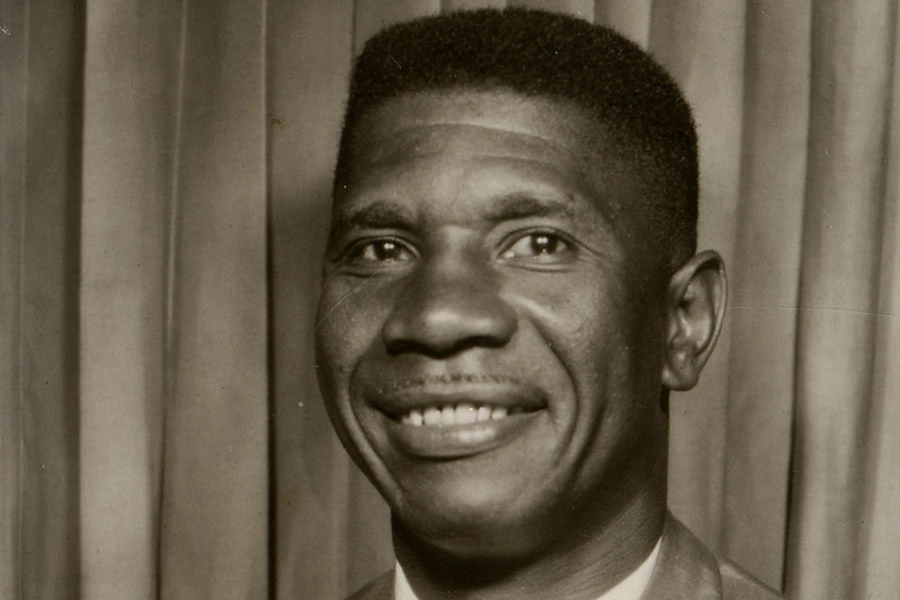
Photographs—LIFE magazine archives, family portraits used in retrospectives—are where Darrell appears most often now: a face in a frame, part of a broader story. Those images perform the role biography sometimes cannot; they make a private person visible, if briefly, to a wider audience. In cultural terms, Darrell is a cameo in a much larger saga—a supporting character whose interior life is readable only in small details.
My personal reading of the family rhythm
I’ve always loved family sagas in film—those long, patient movies where the camera lingers on breakfast tables and creased hands. The Evers family feels cinematic in that way: grief met with steadfastness, public tragedy met with private tenderness, children who inherit both responsibility and the option to resist it. Darrell’s choice—artist, entrepreneur, private life—is a quiet counter-narrative to the expectation of public activism, and that itself is a kind of statement.
FAQ
Who were Darrell Kenyatta Evers’s parents?
His parents were Medgar Wiley Evers and Myrlie Evers-Williams, key figures in civil-rights history and public life.
When was Darrell Kenyatta Evers born and when did he die?
He was born June 30, 1953, and died February 18, 2001, at age 47.
Did Darrell follow his father into activism?
No—Darrell pursued artistic and entrepreneurial interests and lived a more private life than the public activism associated with his parents.
Who are Darrell’s siblings?
He had at least two siblings commonly mentioned: Reena Denise Evers and James Van Dyke Evers.
Was Darrell married?
Some biographical listings note a Lauren McIntyre as a spouse/partner, though adult life remained largely private.
What was Darrell’s occupation?
He is described primarily as an avant-garde painter and entrepreneur rather than a public political figure.
Are there photographs of Darrell?
Yes—family portraits and archival photos appear in historical photo collections and retrospectives.
Is there a public net worth listed for Darrell?
No reliable public net-worth estimate is available for Darrell; public records focus on identity and legacy rather than finances.
Giving Your Fleet Trucks A Second Chance With Refurbished Ecms
Designing Industrial Spaces That Work As Hard As Your Equipment
Why Motorcycle Rides Can Become Dangerous In An Instant
How To Investigate A Neighbourhood Before You Call It Home
How Smart Water Management Helps Concrete Outlast The Weather


